I recently ran a practical 14‑day side‑by‑side trial comparing electrostatic sprayers and traditional manual disinfection in nursery rooms. The aim was simple: test whether an electrostatic system could deliver consistent microbiological control — and do so with clear, repeatable pass/fail criteria that a facilities manager or infection control lead could rely on. Below I share the step‑by‑step protocol we used, the rationale for each decision, the sampling and testing approach, and templates you can adapt for your own sites.
Why run a side‑by‑side trial in a nursery?
Nurseries are challenging environments: high touch frequency, lots of small hands, toys with complex surfaces, and the potential for rapid spread of respiratory and gastrointestinal pathogens. Management asked if an electrostatic sprayer could improve turnaround times and reduce missed surfaces compared with our established manual wiping programme, while maintaining microbiological standards. A short, controlled trial gives actionable evidence without committing to a full rollout.
Overview of the trial design
Key elements we agreed on before starting:
Operational details and personnel
I used the same two trained cleaners throughout to reduce variability. Both received a single refresher training session and a supervised practice run so technique differences were minimised. The operator for the electrostatic sprayer was trained on nozzle technique, overlap, dwell time, and product dilution. The manual operator used standard‑institution technique: top‑to‑bottom, far‑to‑near, clean‑to‑dirty, single‑use wipes per surface.
Sampling strategy and microbiology criteria
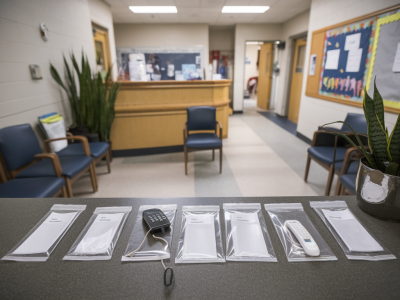
We chose a pragmatic sampling regime focusing on the highest risk surfaces. Sampling was performed by a third party to avoid bias; if you lack access to an external lab, a trained in‑house compliance lead may collect swabs but should follow strict chain‑of‑custody and neutraliser protocols.
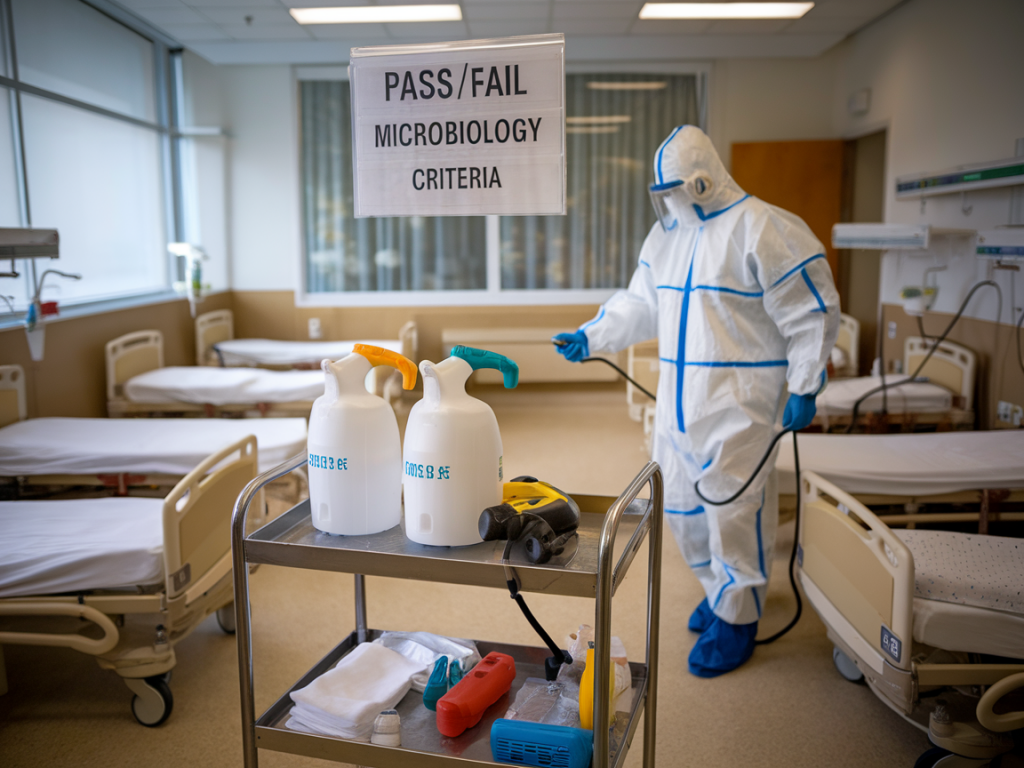
We established pass/fail criteria as follows (based on risk, published guidance, and what was practically enforceable):
| Test | Pass threshold | Fail threshold |
| ATP (RLU) | <250 RLU | >500 RLU |
| ATP (RLU) — cautionary | 250–500 RLU (review) | — |
| ACC (CFU/cm2) | <2.5 CFU/cm2 | >5 CFU/cm2 |
| ACC — cautionary | 2.5–5 CFU/cm2 (review) | — |
Why these thresholds? For high‑contact items in childcare settings, conservative microbial thresholds are appropriate. The ATP thresholds above are commonly used in healthcare and childcare risk assessments — they detect organic residue and give immediate feedback. ACC thresholds align with surface hygiene standards used in other facility trials; importantly, we used both tests because ATP alone does not provide species information and can be confounded by non‑microbial organic material.
Controls, blinding, and data integrity
To reduce bias:
Data capture and observational metrics
Alongside microbiology, we captured:
Typical daily workflow
| 08:00 | Room used by children |
| 17:00 | Final cleaning begins |
| 17:15 | Electrostatic sprayer applied in Room A / Manual wiping completed in Room B |
| 17:30 | ATP swabs taken by external sampler (randomised order) |
| Next day | ACC contact plates incubated and read per lab SOP |
Interpreting results and pass/fail decision rules
We defined a daily pass as both:
If either test exceeded the fail threshold on more than one sample site in a room on a single sampling event, the room was considered failed for that day. If a room failed two consecutive sampling events, we paused the trial to investigate technique, product preparation, or any environmental contributors.
Example of the reporting table used for each sampling event
| Date | Room | Site | ATP (RLU) | ACC (CFU/cm2) | Pass/Fail |
| 03/05 | A (Electrostatic) | Door handle | 180 | 1.2 | Pass |
| 03/05 | B (Manual) | Door handle | 420 | 4.8 | Review |
Practical lessons from running the trial
From the 14 days we learned several pragmatic things you can’t predict from vendor datasheets:
If you're considering a similar trial, use the templates above, plan your sampling carefully, and make sure you set conservative pass/fail criteria that reflect the vulnerability of the population (children, in this case). Trial design and disciplined data collection give you evidence you can present to procurement, clinical leads, or nursery managers — and that's much more persuasive than anecdotes.