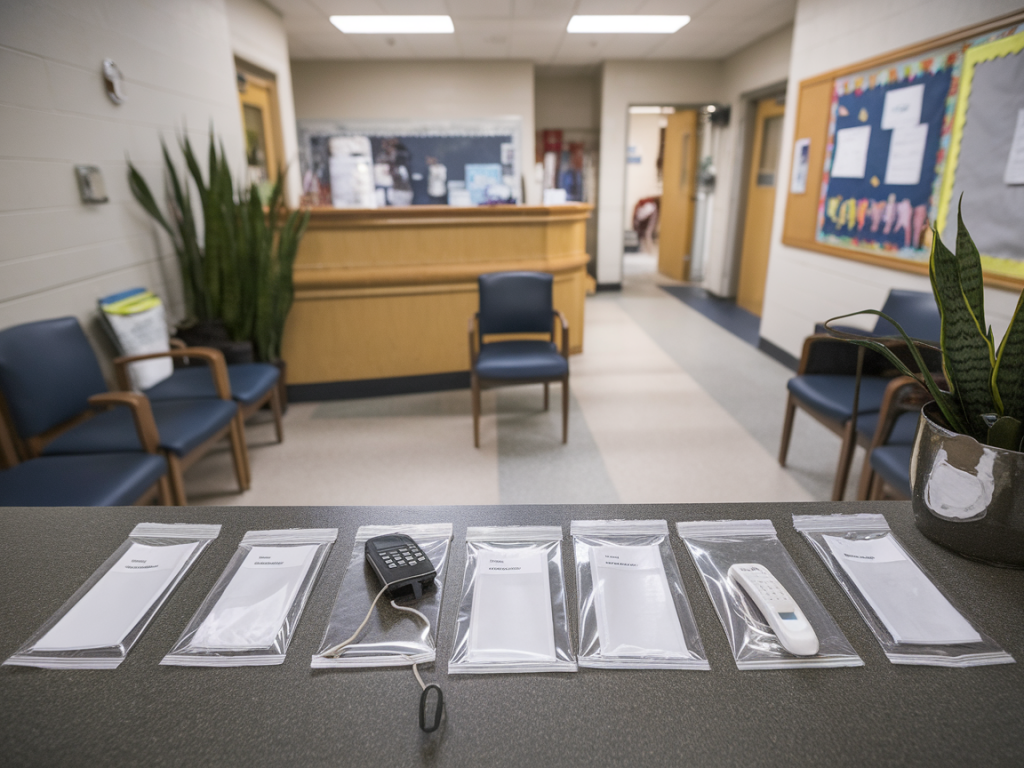
I was asked to validate a low‑allergen surface cleaning protocol for the reception area of a primary school. Reception desks and waiting areas are high‑traffic, high‑contact zones where small traces of food proteins, dust mite allergens and pet dander can persist and pose risks to highly sensitive children. I needed a method that was simple, repeatable, low‑cost and credible to school managers and parents. What I settled on was a seven‑swab test approach that mixes a fast protein/ATP screen with targeted allergen checks — practical enough to run on site and robust enough to show measurable improvements after protocol changes.
Why seven swabs — and what I wanted to prove
Seven swabs gives you enough coverage of a reception layout without becoming onerous for staff or costly for the school. The plan had to answer three questions:
- Are there residual protein residues or biological soils that could indicate allergen risk?
- Are the highest‑risk touchpoints noticeably worse than others?
- Does the new cleaning protocol reduce measurable residues to acceptable levels?
I used a combination of general protein/ATP testing (as a rapid screening tool) and one or two allergen‑specific swabs when protein readings suggested potential food residue. The goal was pragmatic: if protein/ATP is low and allergen spot tests are negative, the surface protocol is doing its job in reducing cross‑contact risk.
Selecting the test tools
For this project I used two types of swab tests:
- ATP/Protein rapid reader — I used the 3M Clean‑Trace Surface Protein test and an ATP luminometer (brands like Hygiena or 3M are commonly used). ATP/protein swabs give immediate relative readings; they’re not allergen‑specific but are excellent indicators of organic residue that might include food proteins.
- Allergen lateral flow swabs — for confirmatory testing I used a peanut/milk surface lateral flow kit (commercial kits from companies like Romer Labs or equivalent). These detect specific protein families and return a clear positive/negative within 10–15 minutes.
This mix keeps costs manageable: the ATP/protein swabs show where to focus, and the lateral flow tests confirm whether that residue includes key food allergens.
Which seven spots to swab
I mapped the reception area and chose points that represent contact risk and cleaning challenge:
- Reception counter near sign‑in pad
- Sign‑in tablet/keyboard surface
- Visitor chair armrest
- Children’s bookshelf top (low, frequently touched)
- Pen cup / communal pens
- Door push plate (incoming door)
- Parent coffee table surface (where snacks may be placed)
These points capture both staff and visitor touch patterns, possible food contact and frequently cleaned vertical surfaces.
Sampling protocol (step‑by‑step)
I ran the validation in three stages: baseline, protocol implementation, and post‑implementation verification. Each swab sequence followed the same process:
- Wear disposable gloves and change between swabs to avoid cross‑contamination.
- For ATP/protein swabs, use a predefined 10 x 10 cm template — swipe the entire area with uniform pressure and place swab into the reader device per manufacturer instructions.
- Record the raw reading and time of day; note if the area had been used recently (e.g., a late‑morning snack).
- If ATP/protein reading exceeded the chosen threshold, run an allergen lateral flow swab on the same spot.
- Log photos of each location and maintain a simple ledger (date, location, test type, operator, reading/result).
Thresholds and interpretation
Thresholds need to be pragmatic rather than absolute. For ATP/protein I used these operational values (common in facilities work):
- Good: protein < 10 µg/100 cm² or ATP RLU < 250 — no further action.
- Acceptable: protein 10–50 µg/100 cm² or ATP RLU 250–1000 — increase cleaning frequency or technique.
- Action required: protein > 50 µg/100 cm² or ATP RLU > 1000 — immediate re‑clean and allergen lateral flow test recommended.
For lateral flow allergen strips (peanut/milk), any visible test line was treated as a positive. Because lateral flow sensitivity varies, any positive required review of cleaning materials and workflow and targeted retraining.
Example results — baseline vs after changes
Below is a simplified table capturing sample results from one site (readings are illustrative but reflect the type of changes I typically see):
| Location | Baseline ATP (RLU) | Baseline Allergen | Post‑clean ATP (RLU) | Post‑clean Allergen |
|---|---|---|---|---|
| Reception counter | 1,800 | Peanut: Positive | 120 | Peanut: Negative |
| Sign‑in tablet | 900 | Not tested | 80 | Not tested |
| Visitor armrest | 600 | Not tested | 90 | Not tested |
| Pen cup | 2,400 | Milk: Positive | 140 | Milk: Negative |
| Door push plate | 450 | Not tested | 70 | Not tested |
| Coffee table | 1,200 | Peanut: Weak Positive | 130 | Peanut: Negative |
| Bookshelf top | 160 | Not tested | 60 | Not tested |
What I changed in the cleaning protocol
When baseline testing showed actionable residues, I implemented a targeted protocol that included:
- Switch to a protein‑active cleaner on horizontal high‑touch surfaces (I used a NHS‑approved detergent with proven protein removal rather than just a disinfectant). Brands like Diversey or Ecolab make suitable products — check COSHH data.
- Introduce a two‑step cleaning for high‑risk spots: detergent wipe followed by a surface‑compatible disinfectant where appropriate.
- Provide designated, labelled pens for sign‑in and a weekly pen rotation and deep clean schedule.
- Staff refresher training on contact points, using a simple 10 x 10 cm swab template to demonstrate before/after testing live.
- Introduce a ‘no food on reception surfaces’ policy with clear signage and communicate to parents.
Verification and ongoing monitoring
After these changes the seven‑swab repeat showed consistent drops into the ‘good’ range and all lateral flow tests returned negative. The process is practical for school teams: do a full seven‑swab check monthly for routine monitoring and immediately when there’s a suspected incident (e.g., food spillage). If any surface returns an actionable reading, retrain and re‑clean until follow‑up swabs confirm improvement.
Finally, keep clear records. A simple spreadsheet with photos, dates, operator initials and readings makes the process transparent to school management and parents — and it’s invaluable for internal audits or when you need to demonstrate due diligence for a child with severe allergies.