Training night cleaners on lone-worker safety doesn’t have to be a dry, compliance-only exercise. Over the years I’ve run dozens of short practical sessions that get teams confident, keep managers legally covered, and produce measurable evidence of competence — all within a tight operational window. Below I’ll share a 90-minute practical kit I use, why each element matters, and simple compliance checkpoints you can track to prove your programme works.
Why a 90-minute practical session?
Night shifts often mean different risks: reduced visibility, limited on-site supervision, late-night deliveries, and potentially unfamiliar or empty spaces. Managers need training that’s realistic and repeatable. A 90-minute session is long enough to practice core skills, run scenario drills, and capture evidence — but short enough to run during shift handovers or as a weekly refresher without disrupting operations.
Learning objectives for the session
When I design the kit I keep three clear objectives in mind:
90-minute practical session breakdown
Below is the template I use on-site. You can adapt timings depending on site size and complexity.
| Segment | Time | Activity |
|---|---|---|
| Welcome & briefing | 10 mins | Explain objectives, review risk assessment highlights and lone-worker policy |
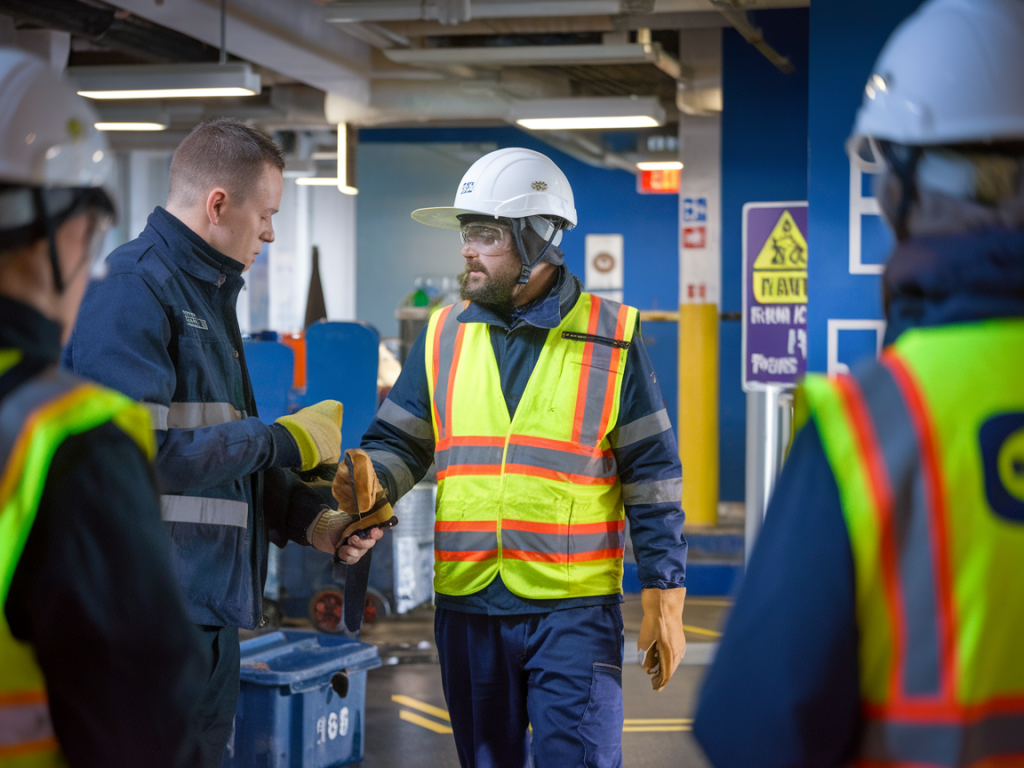
| PPE check & equipment demo | 10 mins | Hands-on check of hi-vis, gloves, torch, first-aid kit, phone/device |
| Communication drills | 15 mins | Test devices, codewords, escalation pathway; practise check-ins |
| Practical cleaning scenarios | 30 mins | Conduct 3 x 5–10 min drills: spill with COSHH, suspicious person, electrical fault |
| Incident reporting & logs | 15 mins | Complete incident form, lone-worker log, upload to system |
| Debrief & measurable checkpoints | 10 mins | Review performance, sign-off checklist, set next refresher date |
What I include in the practical kit
Everything needs to be ready to go in a small bag or box. Here’s what I never skip:
Practical scenario examples
Scenes should be realistic. Here are three I run every time:
Measurable compliance checkpoints
Managers and auditors want evidence. I use five measurable checkpoints that are quick to capture and hard to dispute:
Recording and auditing
Paper records are fine, but digital is easier to audit. I recommend a simple spreadsheet or cloud form that tracks:
Set a target compliance rate — for example, 90% pass rate on scenario drills and 100% device test pass — and report monthly to operations. This turns training into an auditable safety KPI rather than a checkbox exercise.
Small details that make a big difference
From experience, these practical touches improve retention and engagement:
Recommended products and tech
If you’re equipping teams, these are tools I’ve found reliable:
Choose tech that integrates with your incident management system or at least exports logs easily for audits.
How often to refresh training
I run a short practical refresher every 4–6 weeks for night teams and a fuller 90-minute session quarterly. If a near-miss or incident occurs, call an immediate ad-hoc session to address the learning point. Document every refresh with the same checkpoints so you can track improvement over time.