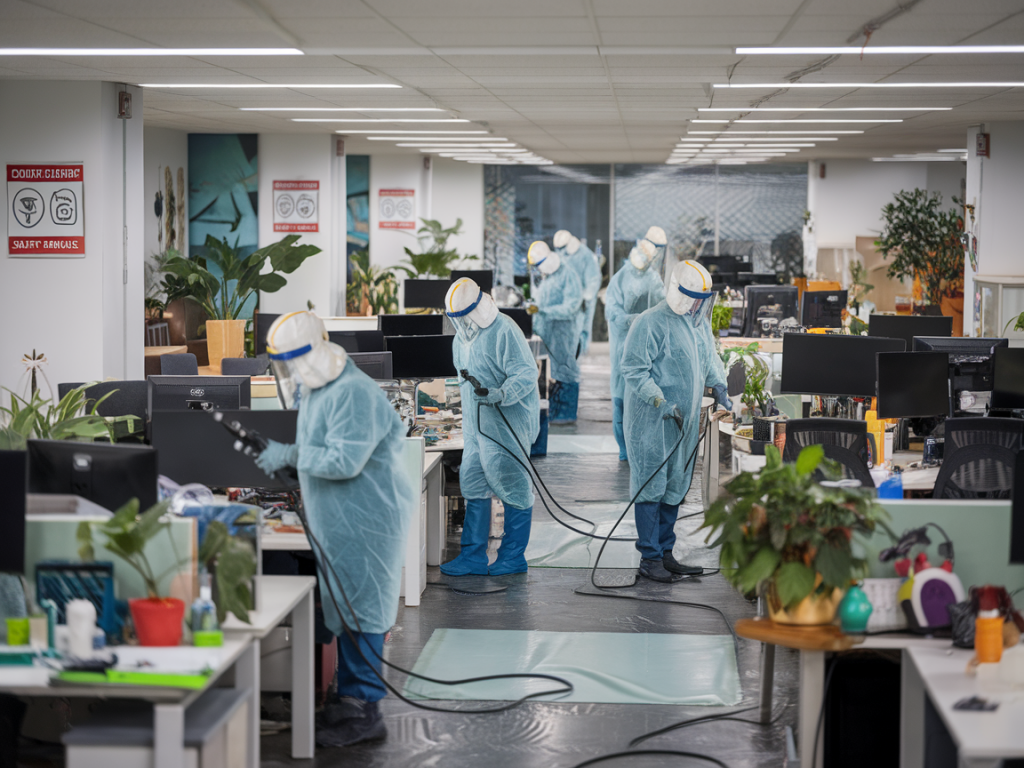
I ran a focused two‑week trial of electrostatic sprayers across an open‑plan office recently and wanted to share exactly what I tested and why. If you're considering introducing electrostatic disinfection into a workplace cleaning programme, you need structured evidence — not just supplier demos. Below I walk through the practical checks I used to prove (or disprove) efficacy in a real office environment, the tools and metrics I relied on, and a sample test schedule you can adapt for your own trial.
Why a structured two‑week trial matters
Electrostatic sprayers promise faster coverage and better wraparound of surfaces compared with manual wipes. In practice, success depends on the device, the chemistry, the operator, and the environment. Two weeks gives you enough time to test: repeatability, impact on microbial load, operational workload, staff acceptance, and costs. I focused on measurable outcomes that facility managers care about — ATP readings, microbial swabs, surface coverage, and user feedback — alongside practical tests like electronics compatibility and room turnaround time.
Primary objectives I set for the trial
What I tested and how
Below are the specific tests I ran during the trial, with practical tips for each.
ATP meters give fast, comparable readings for organic residue. I took baseline readings on the same high‑touch points each morning (desk phones, keyboard surfaces, light switches, meeting table edges) then repeated within 15–30 minutes after electrostatic application. I recorded Relative Light Units (RLU) to check percentage drop. Aim for consistent >70% reduction where disinfectant contact time is respected.
For credibility I sent swabs to a lab for total viable count and, where possible, for targeted organisms (e.g., Staphylococcus spp.). I sampled identical sites pre‑ and 24 hours post‑treatment to show lasting effect. Labs provide colony forming units (CFU) which are persuasive evidence for stakeholders.
I used a fluorescent dye (Glo Germ or similar) diluted into the disinfectant tank for a single application. After spraying, we inspected surfaces with a UV torch to identify missed zones and shadowing. This highlighted common problem areas: monitors’ undersides, deep keyboard crevices, and areas behind freestanding screens.
I checked the manufacturer’s specs (typical 40–80 microns) and did a simple paper test to see if spray was fine and even. Oversized droplets can lead to pooling and residue; too fine and you risk drift and inadequate deposit. Visual inspection on glossy surfaces showed how evenly the product laid down.
Many disinfectants require a specific contact time to be effective. I timed how long surfaces stayed visibly wet post‑application and compared to the product's label. If the visible wet time was shorter than recommended, I flagged this as a protocol issue that would require product change or procedural adjustment (e.g., pre‑wetting or spot wiping).
I tested on multiple materials: plastics, painted surfaces, wood veneer, upholstery, and electronics. For electronics I used a limited, manufacturer‑approved approach (no direct spraying onto monitors; spray nearby and allow wraparound). Any sign of staining, cloudiness, or sticky residue was documented with photos and a timeline for follow‑up.
Staff feedback matters. I collected short surveys after the first few days to gauge smells, irritation, or concerns about being in the office shortly after treatment. Electrostatic sprayers differ: some chemistries are odourless; others have notable scents. Use responses to decide treatment windows (e.g., before start of day, during lunch breaks).
I measured time to treat a 50‑desk zone versus conventional wipe‑based cleaning: setup, spray time, dwell time where required, and pack‑down. I accounted for training time for new operators and included quality checks in the time study.
Track litres used per day and calculate cost per m² (including chemical and PPE amortised). That helps make a business case beyond efficacy — many managers ask about ROI and budget impact.
We trialled digital checklists for each spray event (photo evidence, operator name, batch number of chemical, start/end times). This makes audits and H&S compliance simple and repeatable.
Sample two‑week test schedule
| Day | Activities |
| Day 1–2 | Baseline ATP & swabs; training operators; initial spray with fluorescent marker; coverage mapping |
| Day 3–6 | Daily spray events on first zone; post‑spray ATP readings; staff surveys; compatibility checks |
| Day 7 | Interim lab results; adjust protocol if needed (dwell time, operator technique) |
| Day 8–12 | Repeat in second zone; focused testing on meeting rooms and breakout areas; cost tracking |
| Day 13 | Final swabs and ATP readings; user feedback collection |
| Day 14 | Data consolidation and sample reporting; photo evidence and logbooks collated |
Interpreting the data — what I look for
Raw numbers are only useful with context. I look for:
Practical tips from the field
If you want, I can build a downloadable checklist and a spreadsheet template based on the tests above, pre‑formatted to use with your ATP meter and lab results. I ran these exact protocols at a client site in Manchester and the structured data made it straightforward to secure budget for permanent deployment.