I often get asked by facility managers and reception supervisors how to introduce low‑allergen cleaning routines at the front desk without interrupting service. Reception is the public face of any business — it needs to look and feel welcoming, while also being safe for staff and visitors with allergies or respiratory sensitivities. Over the years I’ve rolled out practical, low‑disruption training plans across retail and corporate sites. Below is a stepwise, hands‑on approach you can use to train reception teams in five practical shifts that keep the desk running and reduce allergen exposure quickly.
Why low‑allergen cleaning matters at reception
Reception areas concentrate several allergen risks: dust and dust mite reservoirs in carpets and soft furnishings, airborne particles from HVAC systems, pollen tracked in on shoes, and residues from fragranced cleaners. Reducing these doesn't mean deep sterilisation — it means choosing the right tools, products and techniques to remove allergens where they accumulate and avoid dispersing them into the air.
My training approach emphasises safe product selection (I work to COSHH guidance), the correct use of HEPA‑filtered vacuums, microfibre for dry and damp wiping, and simple behavioural changes that staff can adopt immediately. The goal is to lower allergen load while keeping the reception desk fully operational.
Shift: Rapid assessment and quick wins (what to do on day 1)
The first shift is a short, focused session to identify immediate problem areas and implement quick fixes. I run this as a 30–45 minute briefing at the start of a shift so no service time is lost.
These changes require almost zero downtime but start reducing airborne particles and surface residues immediately.
Shift: Tool and product standardisation (half‑day practical)
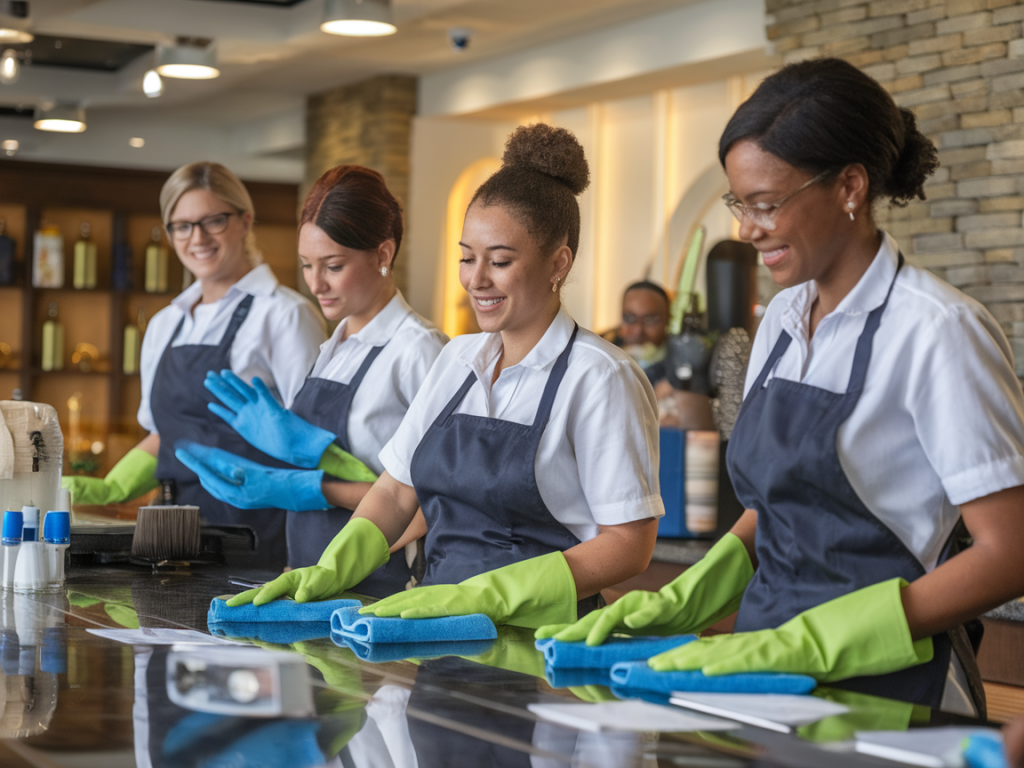
Next, I dedicate a half‑day practical to standardise the kit and show correct use. Consistency is key: mixed products and tools lead to inconsistent results and higher allergen carryover.
This session is practical and tactile — staff learn by doing and don’t need to be taken off front‑of‑house duty for long.
Shift: Micro‑procedures for peak service (short, role‑specific coaching)
Receptionists can't leave the desk during busy periods. So this shift focuses on micro‑procedures they can perform without disrupting service.
These tiny habits reduce continuous re‑aerosolisation and make allergen control invisible to visitors.
Shift: Deeper cleaning and scheduling (half‑day with night/after‑hours plan)
Some tasks are best done outside core service hours to avoid disturbance. This shift establishes an after‑hours routine and clarifies responsibilities.
| Frequency | Task | Notes |
|---|---|---|
| Daily | HEPA vacuum mat and seating | Morning before opening or evening after close |
| Daily | Damp‑wipe counters and touchpoints | Use colour‑coded microfibre |
| Weekly | Deep clean soft furnishings | Use upholstery tool and low‑allergen upholstery cleaner |
| Monthly | Air vent and grille inspection | Coordinate with maintenance; change filters if needed |
Shift: Measurement, feedback and continuous improvement (15–30 minute weekly review)
Finally, training isn’t finished the moment everyone knows the steps. I build simple metrics and feedback loops into the routine so improvements are sustained.
Throughout every shift I emphasise empathy: reception staff are frontline and often handle complaints and sensitive situations. Giving them simple, fast, and effective tools helps them feel confident and reduces stress when dealing with allergy‑sensitive visitors.
If you’d like templates for checklists, COSHH quick‑cards for your chosen products, or a sample training timetable tailored to your rota, I can prepare downloadable resources you can drop straight into your induction pack.