Open-plan offices present a unique challenge: you need to keep large shared spaces clean and safe without disrupting the flow of work. Over the past decade I’ve built cleaning programmes for offices, retail and hospitality sites, and when COVID-19 hit I adapted those programmes to prioritise infection control while keeping staff productivity front of mind. Below I share a practical, 30-minute daily cleaning routine designed for open-plan offices — focused on high-risk touchpoints, quick disinfection cycles, ventilation checks and minimal disturbance to employees.
Principles behind a 30-minute routine
This routine is built on four simple principles I use in every contract:
Who should do this and when
I recommend the routine be done by a trained cleaning operative or a facilities team member during a low-traffic time — typically just after the morning peak (around 10:00–10:30) or after lunch (13:30–14:00). Consistency matters more than exact timing; pick a slot that avoids interrupting team meetings and ensures surfaces have been used recently so you’re disinfecting relevant touchpoints.
What to have on your trolley (quick checklist)
30-minute routine — step-by-step
The sequence below saves time because it follows a logical route and groups similar tasks. I time-box each zone so you always know how long you’ll be in each area.
| Zone | Time allocation | Key tasks |
|---|---|---|
| Reception and main entrances | 5 minutes | Disinfect door handles, reception desk, sign-in tablet, card readers; quick wipe of seating arms |
| Primary open-plan desk area | 10 minutes | Wipe shared desks, high-touch equipment (printers, scanners), hot-desking zones; spot-clean screens with alcohol wipes |
| Meeting rooms and collaboration hubs | 7 minutes | Disinfect table edges, remote controls, conference phones, whiteboard markers and erasers; air out room if possible |
| Kitchen / break area (if in scope) | 5 minutes | Sanitise handles, taps, kettle, microwave buttons, communal fridge handles and tables |
| Quick ventilation check & final sweep | 3 minutes | Check CO2 levels / open windows briefly, empty small bins, replace cloths/gloves |
Practical tips for each zone
Reception: Reception sets the tone. I always ensure the door handles and any visitor-facing touchscreens are sanitised first. If there’s a visitor tablet, use a wipeable screen cover and clean it after every visitor or on the 30-minute run.
Desk areas: Focus on shared items — printers, photocopiers, communal stationery, and door handles to breakout rooms. For personal computers and monitors, use alcohol wipes or a dedicated electronics spray; avoid bleach on screens. If hot-desking is common, encourage staff to keep a small pack of disinfectant wipes at their workstation so the operative can do a rapid pass without touching personal items.
Meeting rooms: Disinfect chair arms, table edges and any shared AV equipment. If the meeting room will be occupied soon, open a window or switch on mechanical extract for 5–10 minutes after cleaning to improve air change.
Kitchen / break area: The kitchen is a high-risk social space. Wipe handles, communal cutlery drawers, fridge doors and appliance buttons. Encourage staff to wash their own mugs, but have a visible cleaning schedule for the area so everyone knows it’s maintained.
Products and chemicals — what I use and why
I choose products that are effective yet kind to surfaces and staff. For most office surfaces I use a hospital-grade quaternary ammonium disinfectant with a short contact time (1–5 minutes) and a separate 70% IPA spray for electronics. For stainless steel and glass I use pH-neutral cleaners to avoid streaks and corrosion.
Ventilation: a non-negotiable part of infection control
Surface cleaning alone won’t keep an office COVID-safe. I always pair the 30-minute pass with ventilation checks. If you have mechanical HVAC, set higher fresh-air intake and run systems for longer hours. If you rely on natural ventilation, open windows and doors for 5–10 minutes after the cleaning pass and encourage teams to do quick airing breaks during the day.
Use a portable CO2 monitor as a proxy for ventilation. Aim to keep CO2 below 800 ppm in densely occupied areas. If levels spike, schedule additional airing or consider portable HEPA units for densest zones.
Communicating with staff
Cleaning is more effective when staff are partners, not passive recipients. I recommend a short poster or intranet note that explains the 30-minute routine — what gets cleaned, how often, and how staff can help (e.g., clear personal clutter from shared desks, use provided wipes). Transparency builds trust and reduces complaints.
Measuring success and tweaking the routine
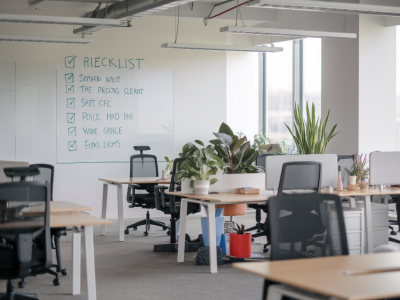
Set a few simple KPIs: visible touchpoint checklist completion, CO2 readings, and staff feedback. For the first two weeks, monitor whether certain areas consistently require extra attention — you may need to reallocate minutes (e.g., more time in the kitchen at lunchtimes or extra passes on a busy printer cluster). I use a handheld checklist (paper or app) so operatives tick off completed tasks and managers can review trends weekly.
Training and PPE
Make sure anyone on the 30-minute rota is trained on correct glove use, product dilution (if required) and contact times. Gloves should be changed between different zones (e.g., toilet vs. kitchen) and hands washed after removing gloves. Keep eye protection available if using products with strong fumes, and avoid spraying when staff are present nearby.
Finally, the route to a COVID-safe, productive office is pragmatic and repeatable. A focused 30-minute routine, combined with ventilation checks and staff engagement, goes a long way toward reducing transmission risk while keeping downtime minimal. If you want, I can share a downloadable checklist version of this routine tailored to your office layout and occupancy patterns.