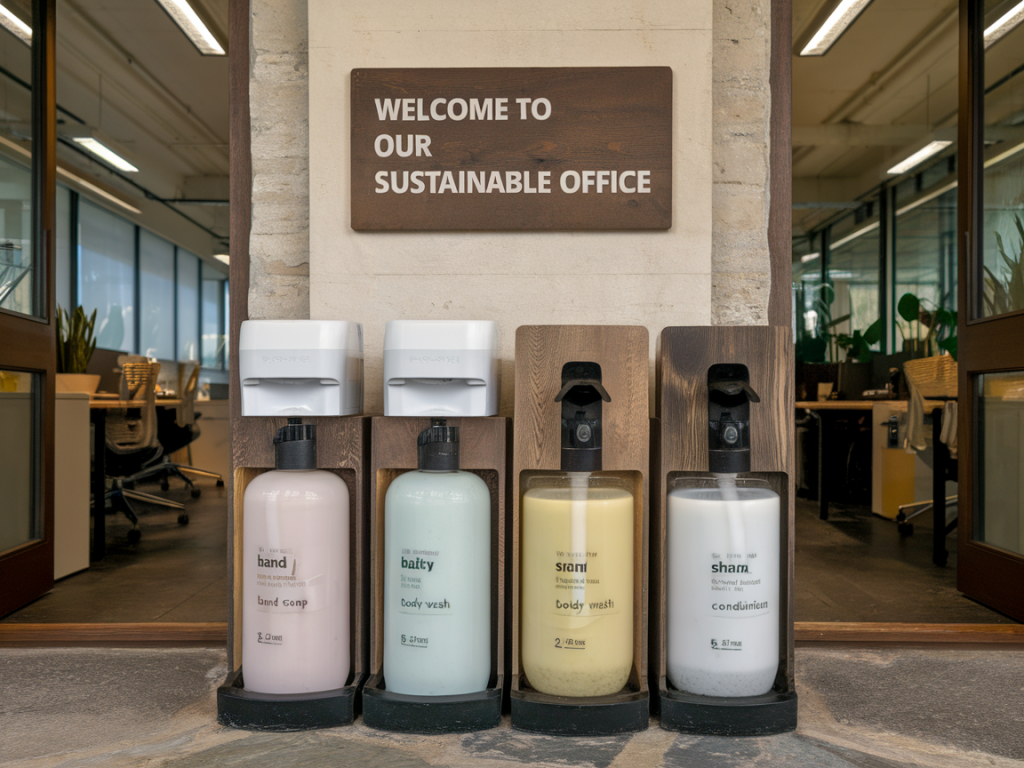
I recently completed a 90-day pilot where we switched a midsize office (approx. 220 staff, open-plan floors, shared kitchens and washrooms) from single-use cartridge and bottled dispensers to refillable bulk dispensers. The goal was simple: prove the financial and operational ROI quickly and convincingly so the business could decide whether to roll the change out company-wide. Below I walk you through exactly how I validated the ROI in 90 days — the metrics I tracked, the baseline I established, the methodology I used, and the outcomes we measured. I write this from direct operational experience so you can replicate the approach with confidence.
Why validate in 90 days?
Ninety days is long enough to capture reliable consumption patterns, staff behaviour change, and vendor/billing nuances — but short enough to keep stakeholders engaged and to present a clear business case before budgets shift. In my experience, most variances (initial novelty effects, occasional supply hiccups) stabilise in that window, making the data meaningful for a rollout decision.
Set a clear baseline (week 0)
Before swapping anything, I spent the first week collecting baseline data. You must be disciplined here — the accuracy of your ROI depends on a good starting point.
Example baseline figures (monthly averages):
| Item | Cost/month | Volume/month |
| Cartridge hand soap + rental | £420 | 60 cartridges |
| Bottled surface cleaner | £120 | 24 bottles |
| Paper towels (rolls) | £260 | 200 rolls |
| Facilities labour (refill-related) | £1,000 | ~40 hours |
Choose the right refillable system
I evaluated a few options: industrial wall-mounted bulk dispensers (e.g. GP PRO by Georgia-Pacific), pouch-in-dispensing systems (like Tork EasyCube-compatible), and branded bulk systems from GOJO and Diversey. I leaned toward pouches with dosing pumps because they reduce spills and are compatible with most dispensers. Two important selection criteria:
We selected a pouch system with 1,000 ml pouches for soap and a concentrated surface cleaner with a dilution dispenser for smaller bottles. The supplier provided dispensers and training at no extra cost during the trial.
Define KPIs to track daily/weekly
I agreed KPIs with the client and set up a dashboard for weekly reviews.
How I measured consumption and cost savings
Accurate consumption measurement comes from two places: dispenser counts and supply tracking. During the pilot I:
Key formulas I used:
90-day results (real numbers)
Here’s a simplified snapshot of what we actually recorded across the 90 days (converted to monthly equivalents):
| Metric | Baseline/month | Pilot/month | Change |
| Consumables cost | £800 | £420 | −£380 (−47.5%) |
| Facilities labour (refill-related) | 40 hours (£1,000) | 18 hours (£450) | −22 hours (−55%) |
| Units of waste (cartridges/bottles) | 84 | 12 | −72 (−86%) |
| Service incidents | 6/month | 2/month | −4 |
Monetised monthly savings (approx):
Total monthly saving ≈ £990
Other tangible and intangible benefits
Beyond the numbers, the pilot produced benefits that matter to decision-makers:
How to present the ROI to stakeholders
I recommend a short, visual one-page summary and a deeper appendix with raw data. Key points to present:
For our client I created a simple payback table showing three scenarios (conservative, expected, optimistic) that included sensitivity to consumption variance and labour cost assumptions. That helped the CFO feel comfortable with the projection.
Lessons learned and practical tips
From conducting the 90-day pilot I want to pass on the practical lessons I wish I'd known at the start:
If you want, I can share the Excel template I used to capture pump counts, cost comparisons, and the payoff scenarios — it makes setting up the pilot far quicker. Switching to refillable bulk dispensers can deliver fast ROI, but only when you measure the right things and control for behaviour changes during the transition.