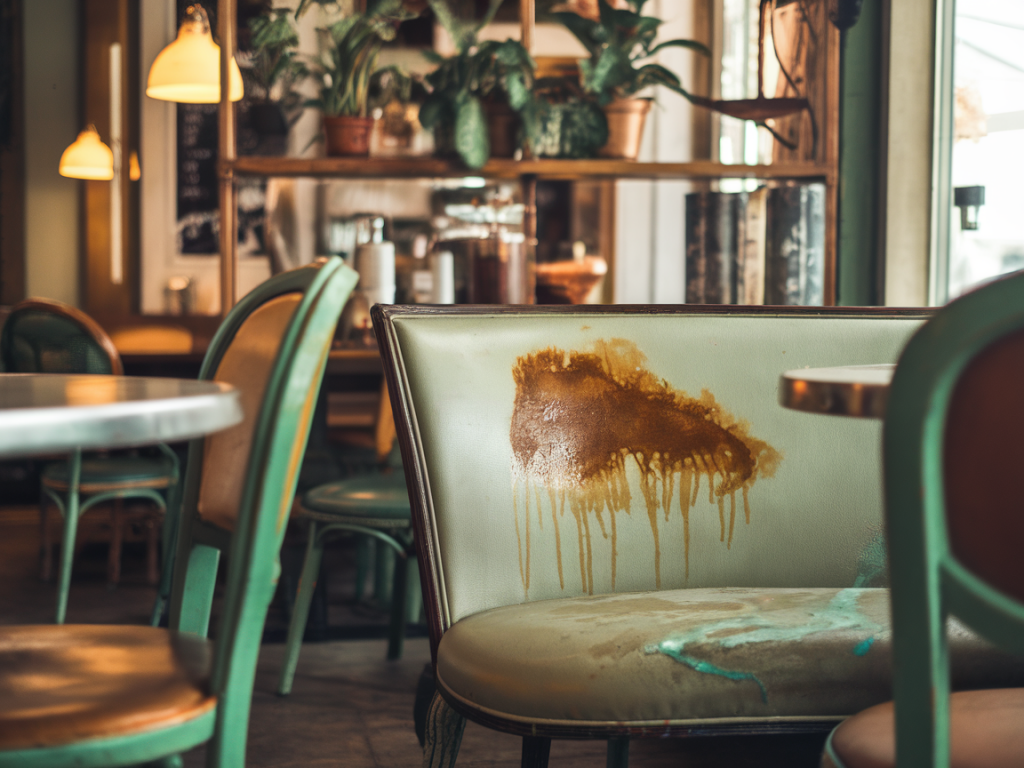
Dealing with caffeine and grease on café upholstery is one of those daily challenges that separates a tired-looking seating area from a space that feels clean, inviting and cared for. Over the years I’ve tested a lot of chemistries through the wand of a carpet extractor, and what works best is rarely a single “miracle” product — it’s the right combination of chemistry, pH, mechanical action and rinse. Below I walk through the practical, eco-friendly approaches that consistently deliver results in café environments.
Why caffeine and grease are different problems
Caffeine-based stains (coffee, tea, energy drinks) are primarily dye and tannin-based. They penetrate fibres and bond with fabric dyes and residues. Grease and oil are hydrophobic — they repel water and stick to fibres as a film rather than a coloured stain.
Because of their different chemistry, they respond to different treatments: caffeine stains respond well to water-based, slightly acidic or neutral cleaners that lift colourants, while grease responds to surfactant- and solvent-based systems that emulsify oil into the cleaning solution so the extractor can remove it.
Principles of eco-friendly extractor chemistry
When I say “eco-friendly” in a commercial cleaning setting I mean products that are:
Low in volatile organic compounds (VOCs) and free from harsh solvents like 1,1,1-trichloroethane.Biodegradable surfactants and enzymes where possible.Concentrated to reduce packaging and transport footprint.Effective at recommended dilutions so you don’t have to overuse product.Those principles still allow for potent cleaning. The trick is choosing formulas that combine surfactants, enzymes and pH control rather than brute-force solvents.
Key chemical components that work—what to look for
Here are the active elements I rely on for caffeine and grease in upholstery when using a hot-water extractor:
Non-ionic and amphoteric surfactants — gentle on fabrics, effective at lifting oils and dyes into suspension without leaving heavy residues. Non-ionics are particularly useful on upholstery as they’re less likely to affect fabric dyes.Enzymes (proteases, amylases, lipases) — lipases target fats and oils, which makes them very effective on greasy café seats; proteases help on protein-rich spills; amylases can help with carbohydrate residues. Enzyme blends are common in eco formulas.Mild chelating agents — bind metal ions and reduce redeposition. EDTA alternatives like GLDA (glutamic acid diacetic acid) are more biodegradable and commonly used in greener products.pH modulation — slightly acidic to neutral (pH 4–7) formulas are safest for most upholstery when tackling tannin/caffeine stains; grease control sometimes benefits from a slightly alkaline approach (pH 8–9) combined with good rinsing, but avoid strong alkalis on sensitive fabrics.Low-flashpoint solvents (if needed) — some eco-friendly products include small amounts of glycol ethers or plant-derived solvents (d-Limonene, methyl soyate) to help cut heavy oils; ensure low VOC and suitability for fabric.Practical product types I use and why
Not every café upholstery job needs the same product. In practice I use one of three approaches, depending on soil and fabric type:
Enzyme-based all-rounder (best for mixed coffee stains and light grease) — these are water-based, low-alkaline cleaners with lipase and tannin-targeting components. They are very safe for regular maintenance and are my go-to for daily extraction cleaning.Surfactant-rich emulsifier (best for heavy grease) — higher surfactant load, still biodegradable and often combined with a mild solvent. Use when you see oily sheen or food-based grease buildup. Pair with a thorough rinse cycle.Dual-step system (pre-spray + rinse) — a targeted pre-spray with a concentrated grease emulsifier followed by a neutral pH extractor rinse or an enzyme rinse to breakdown residual oils and remove colourant lift. This is my preferred method for stubborn spots.Brands and formulations I’ve tested
I’ve worked with numerous commercial eco lines. A few product types that regularly perform well in cafés (always follow manufacturer guidance and test first):
Enzyme-based extraction detergents from professional brands that advertise biodegradable surfactants and lipase blends.Plant-solvent enhanced emulsifiers (small % of d-Limonene or methyl soyate) for heavy kitchen greases.Neutral rinse agents specifically formulated to reduce tack and residue after extraction — very helpful after an oil-heavy clean.I avoid straight citrus or undiluted solvent applications directly on upholstery without testing — they can affect dye stability or cause watermarks if not rinsed correctly.
Step-by-step method I use for café upholstery
Pre-inspect and PPE: identify fabric type and check manufacturer tags. Put on gloves and ensure good ventilation. Note any delicate or dry-clean-only fabrics for specialist treatment.Dry soil removal: vacuum or brush to remove loose crumbs and surface oils; mechanical agitation improves chemical access.Spot test: always test any chemistry in an inconspicuous area for colourfastness and material reaction.Pre-spray: for recent coffee spills use a light enzyme pre-spray; for greasy seats use a targeted emulsifier pre-spray. Agitate with a soft brush if required. Dwell time 5–10 minutes but do not let fabric dry.Extractor pass: use hot-water extraction with the recommended dilution. Set low-to-moderate vacuum to avoid overwetting delicate upholstery. Multiple short passes are better than one long one.Rinse: follow with a neutral rinse solution if the chemistry requires it; this reduces tack and residue which attracts soils.Drying: blot with clean microfibre pads, then allow air drying with fans. Rapid drying reduces redeposition and odours.How to set extractor parameters
My standard settings for café upholstery:
Water temp: 40–60°C depending on fabric tolerance.Solution pressure: low to medium — you want agitation, not saturation.Vacuum strength: medium-high for upholstery to remove emulsified oils.Multiple passes: apply cleaner, extract, then rinse with low-chemical water.Quick comparison table: chemistry at a glance
| Problem | Best chemistry | Pros | Cons |
| Caffeine/tannin stains | Enzyme + non-ionic surfactant, neutral to slightly acidic | Safe on many fabrics, removes dye-based stains | May need multiple passes on old stains |
| Fresh grease/oil | Surfactant-rich emulsifier, lipase blends, mild plant solvent | Efficient at emulsifying fats, fast results | Requires good rinsing to avoid residue |
| Heavy, aged grease | Pre-spray solvent-enhanced emulsifier + extractor rinse | Breaks down built-up oils | More labour-intensive and needs testing |
Safety, compliance and sustainability notes
Always read COSHH sheets for any product you use and keep mixing to recommended dilutions. Even eco-labelled products can cause irritation if concentrated. Use dosing systems and dilution-controlled buckets to avoid waste and overuse.
From a sustainability perspective: prefer concentrated, enzyme-rich formulas that allow lower dosages; choose refillable or bulk packaging where possible; and document chemical use so you can demonstrate reductions in VOCs and overall chemical consumption.
If you’d like, I can share a shortlist of specific commercial products I’ve used successfully and the exact dilutions and extractor settings I pair with each. Tell me the most common fabric types you work with and I’ll tailor the recommendations.