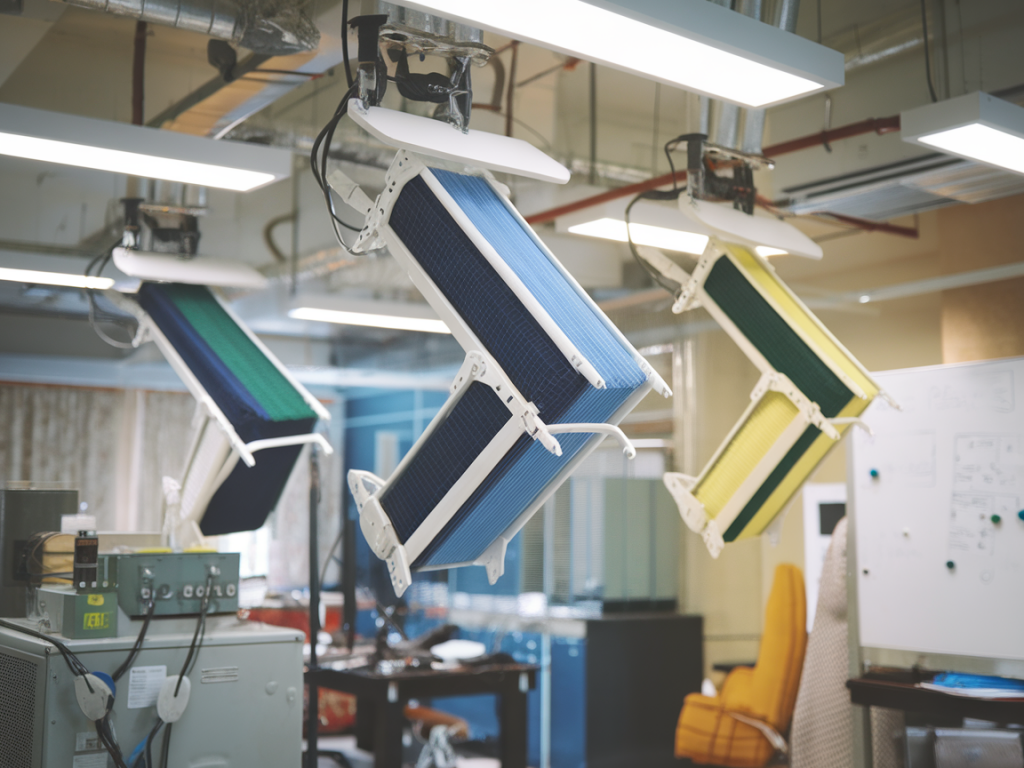
I’ve spent more than a decade helping businesses improve their workplace environments, and one question I get asked regularly during site assessments is: “Which portable HVAC filter attachments actually reduce allergy incidents in offices?” It’s a practical, outcome-driven question — not just about cleaner air, but fewer sick days, better productivity, and happier occupants. Below I share a testing protocol I use in the field and the pass/fail criteria I apply when evaluating portable filter attachments for HVAC ducts, fan coils, and standalone units. This is grounded in direct operational experience and framed so facilities teams can replicate it easily.
Why test portable HVAC filter attachments?
There are many products on the market claiming HEPA-level performance or “captures 99% of allergens.” In real offices, success depends on how these filters integrate with existing systems, airflows, and occupancy patterns. I test to verify three things:
Actual reduction in airborne allergen counts (pollen, pet dander, dust mite fragments).Compatibility and safety with the existing HVAC or fan-coil system (no undue pressure drop or motor strain).Practicality: maintenance effort, noise, and cost-effectiveness.Overview of test environment and baseline setup
Tests should be conducted in a representative office space. I usually work with a 50–150 m² open-plan area with typical occupancy and a central HVAC system. If testing on a small office or meeting room, scale measurements accordingly.
| Room size | 50–150 m² |
| Occupancy during test | 2–6 staff (normal working activities) |
| Baseline HVAC | Existing AHU or FCU with filter stage accessible |
| Measurement tools | Particle counter (0.3 µm and 2.5 µm channels), allergen swipe tests, CO₂ monitor, sound meter, manometer |
Testing protocol — step by step
Follow these steps to get reproducible, meaningful results. I run each condition for a minimum of 48 hours to average daily variations, although some sites benefit from a full-week run.
Baseline measurement (48 hours): Remove any portable attachments. Run the HVAC at normal setpoints. Log particle counts (0.3 µm and 2.5 µm) every hour, occupant activity, CO₂, and noise. Take surface swipe samples from desk areas and carpets for allergen analysis if possible.Install the filter attachment: Fit the portable attachment according to manufacturer instructions. Note required adaptors, whether it sits in the duct, on the FCU, or clamps to the grille.Immediate safety checks: Use a manometer to measure pressure drop across the coil and filter, and visually check the fan motor for extra strain or unusual noises. If pressure drop exceeds 150 Pa on small fan-coil units, stop and re-evaluate – risk of motor overload/coil freeze increases.Operational run (48–168 hours): Run the system under normal occupancy. Log the same metrics as baseline — particle counts, CO₂, sound levels, and subjective occupant feedback (nasal irritation, sneezing, eye irritation).Maintenance simulation: After the trial run, inspect the filter for loading and estimate service interval. For reusable filters, perform a clean and re-test if required.Allergen lab confirmation (optional but recommended): Send collected swipes and filter dust samples for allergen immunoassay (e.g., ELISA for common allergens) to confirm reductions in clinically relevant allergen mass.Key metrics and how I measure them
Particle reduction: Primary metric. I compare mean concentrations for 0.3 µm (respirable) and 2.5 µm (coarse) channels. For allergies, reductions in 2.5 µm and larger fragments are often most meaningful.Allergen mass: If lab testing is available, measure allergen mass (µg/m² or µg per filter). This shows real allergen capture rather than just particle counts.Pressure drop: Measured across the filter to assess strain on the system's fan. Excessive drop can reduce airflow and harm HVAC performance.Noise: A-weighted decibels at desk height; attachments that add >5 dB are often unacceptable in office environments.Occupant-reported symptoms: Short surveys before and after (simple 0–5 scale for nasal congestion, sneezing, eyes) help link air changes to perceived allergy relief.Pass criteria I use
Not every project requires HEPA-level removal. I use pragmatic pass criteria that balance effectiveness and operational practicality:
| Particle reduction (0.3 µm) | ≥ 60% reduction vs baseline for portable attachments tested over 48–72 hours = Pass |
| Particle reduction (2.5 µm) | ≥ 75% reduction vs baseline = Strong Pass |
| Allergen mass (lab) | ≥ 50% reduction in measurable allergen load on surface swipes or filter dust (if lab testing used) = Pass |
| Pressure drop | ΔP increase ≤ 100 Pa on FCUs; ≤ 150 Pa on larger AHUs = Acceptable |
| Noise | Increase ≤ 5 dB at workstation = Acceptable |
| Maintenance | Service interval ≥ 3 months under normal occupancy (for disposable filters) = Practical |
Brands and products I’ve tested
I’ve trialled several attachments and standalone HEPA units on client sites. A few notes from experience:
Filtrete/3M inline filter adapters — easy to fit in larger AHUs, solid particulate reduction, low noise, but require AHU bypass checks.IQAir HealthPro series (portable units) — very effective at 0.3 µm removal, quiet, but higher capex; best for meeting rooms and small offices.Camfil Pocket filters with add-on electrostatic modules — good balance of allergen capture and low pressure drop for retrofit applications.Generic clamp-on HEPA attachments for fan coils — results are variable; many create excessive pressure drop and shortened fan life unless carefully matched.Real-world implementation tips
Always measure before you buy. Vendor claims aren’t a substitute for on-site testing with your system and occupancy pattern.Consider a hybrid solution: targeted portable HEPA units for high-occupancy areas plus improved pre-filtration in AHUs.Train maintenance teams to check pressure drop as part of routine checks; early detection prevents fan damage and reduced airflow.Record occupant symptom logs during trials — objective data is valuable, but perceived comfort drives acceptance.When clients follow a structured protocol like this, decisions are less about marketing claims and more about demonstrable improvements in air quality and occupant health. If you want, I can share a printable checklist and data logging template I use on site to simplify running these tests.