I’ve spent the last decade building cleaning programmes for multi-department offices where cross-contamination is one of the most frequent — and most avoidable — risks. Below I share a practical cleaning rota template designed to reduce cross-contamination, plus the reasoning behind each element and tips you can implement immediately. This is what I use in my consultancy work at Bluebaycleaning Co: straightforward, reproducible, and tailored for busy UK offices.
Why a rota matters for cross‑contamination
A cleaning rota is more than a schedule. When it’s designed with infection control in mind it becomes a control measure: it defines who cleans what, when, with which products and equipment, and in what order. Without clarity, staff can inadvertently spread contaminants by using the same cloths, moving from high‑risk to low‑risk areas, or skipping key touchpoints during peak times.
My objective with the rota below is to ensure:
Key principles embedded in the rota
When I design a rota for cross‑contamination control I apply these everyday principles:
The rota template (weekly, multi‑department)
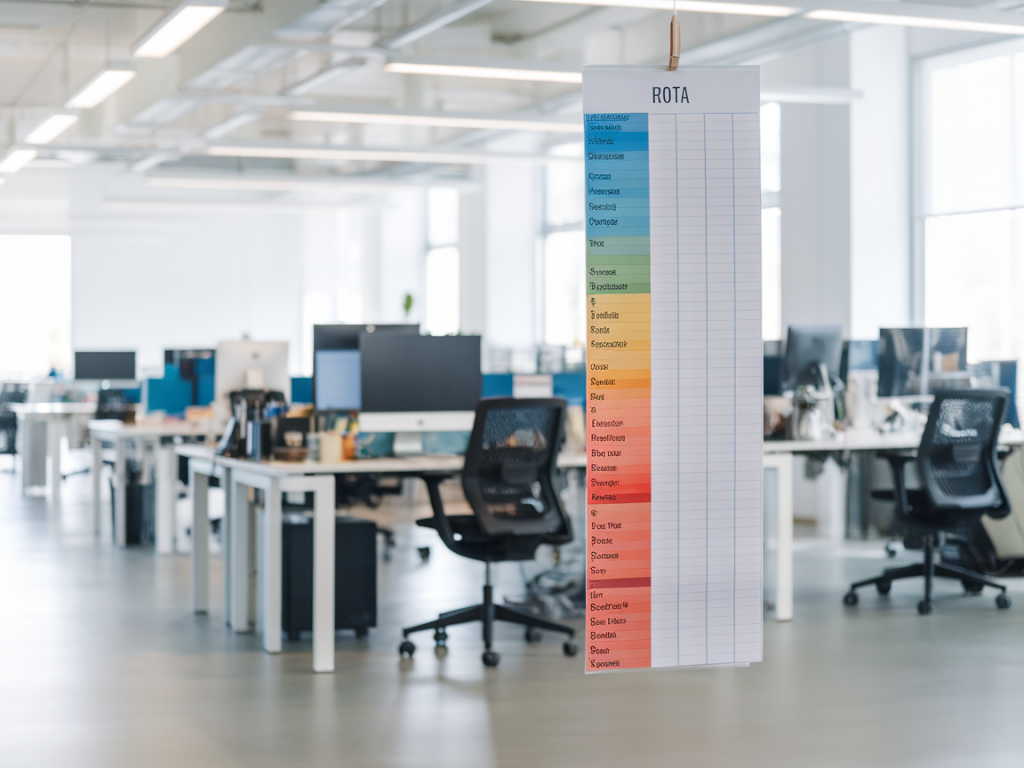
Below is a condensed weekly rota you can copy and adapt. Departments used in this example: Reception, Open Plan Office, Meeting Rooms, Kitchen/Break Area, Toilets, IT/Server Room (high sensitivity).
| Day | Shift | Zone | Tasks | Frequency | Assigned colour & equipment | Sign‑off |
|---|---|---|---|---|---|---|
| Mon–Fri | Early (07:00–10:00) | Reception | Disinfect reception desk, screens, card readers, door handles; empty bin | Daily AM | Blue cloths, blue mop, alcohol spray (70% IPA) | Cleaner initials + time |
| Mon–Fri | Early (07:00–10:00) | Open Plan Office | Wipe high touch points (desks, phones), vacuum floors, spot clean spill | Daily AM | Green cloths, microfibre duster, vacuum | Cleaner initials + time |
| Mon–Fri | Mid (12:00–14:00) | Meeting Rooms | Disinfect tables, chairs, remotes, conference phones; tidy | Daily Mid | Yellow cloths, spray disinfectant | Cleaner initials + time |
| Mon–Fri | Late (16:00–18:00) | Kitchen/Break Area | Clean surfaces, sinks, taps, microwave interiors; empty recycling | Daily Late + after lunch peaks | Red cloths, dedicated mop, food‑safe sanitiser | Cleaner initials + time |
| Mon–Fri | Any | Toilets | Disinfect bowls, sinks, flush handles, door locks; restock consumables | 3x daily (AM, Mid, Late) | Purple cloths, toilet specific disinfectant | Cleaner initials + time |
| Mon & Thu | Late | IT/Server Room | Dust using ESD‑safe materials, blow debris, clean external racks (no liquids) | Twice weekly | ESD wipes, dry microfibre | Cleaner initials + time |
| Fri | Late | All zones | Weekly deep clean: mop heads, launder cloths, machine extract carpets in high use zones | Weekly | Industrial washer/tumble, carpet extractor | Supervisor initials + audit note |
How to use the template: practical tips
Here are the practical steps I ask cleaning teams to follow when they work with this rota:
Training, PPE and verification
Clear rotas fail without training and verification. I recommend a short induction for every cleaner that covers:
Verification is simple: each shift sign‑off plus a weekly supervisor audit. I use a 5‑point audit checklist: adherence to colour coding, correct product use, sequence followed, frequency met, and equipment condition. Failing items require immediate corrective action.
Managing shared equipment and transient areas
Shared printers, communal kiosks, and lift buttons are hotspots. I schedule quick wipe‑downs of these every two hours during business days. If you have hot‑desking, provide disinfectant wipes at every desk cluster and show staff how to do a 30‑second wipe of keyboards and phones before and after use.
Adaptations for different office sizes and shifts
Smaller offices can merge roles: the same cleaner can handle multiple zones as long as they adhere to the cleaning sequence and use appropriate kits. For 24/7 premises: separate day and night teams, enforce the colour coding across shifts, and ensure the handover log records any unresolved issues.
Products and equipment I recommend
I’m pragmatic about brands — use what meets EN standards and suits your budget — but a few pieces of kit make life easier:
If you’d like a downloadable Excel version of the rota with editable columns for times, names and audit scores I can prepare one tailored to your floor plan and staffing. Drop me a message via the contact page on Bluebaycleaning Co or reply here with your office size and shift patterns and I’ll send a template you can plug straight into operations.