Equipment Reviews

How to compare electrostatic sprayers with manual fogging in classrooms using simple microbiology pass/fail criteria

How to compare electrostatic sprayers with manual fogging in classrooms using simple microbiology pass/fail criteria

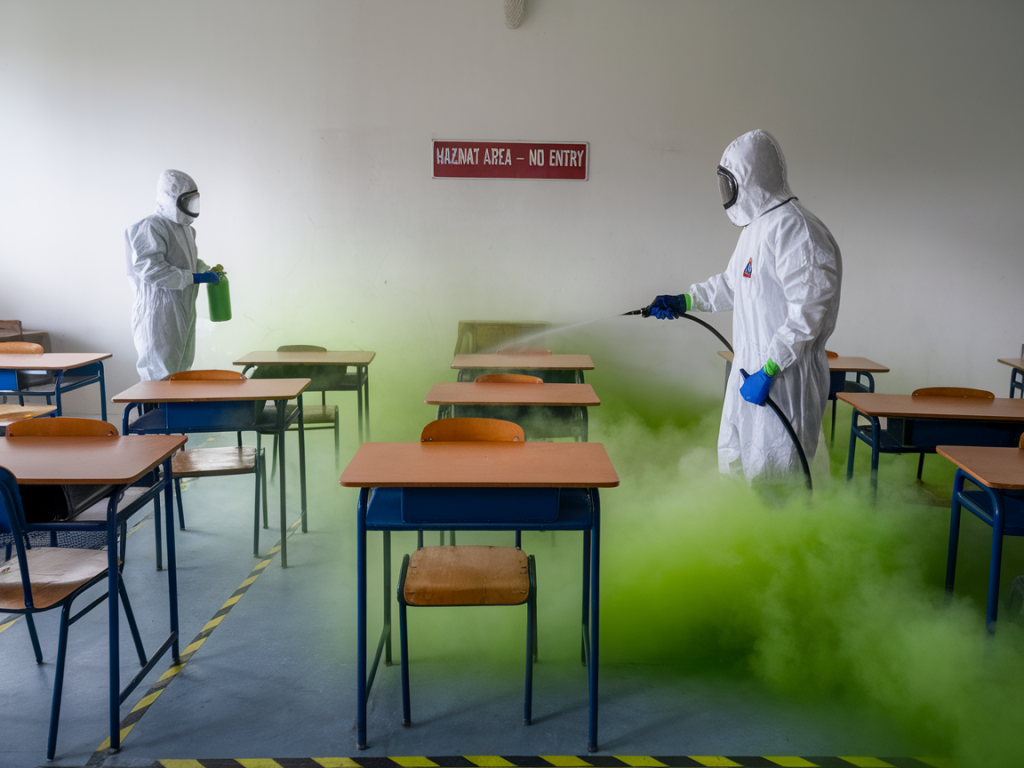
I recently ran a small field test in a set of primary school classrooms to answer a practical question facility managers ask all the time: are electrostatic sprayers measurably better than manual fogging when judged by simple microbiology pass/fail criteria? I designed a pragmatic, low-cost microbiology protocol that any cleaning team or facilities manager can use to compare two disinfection methods and get reliable, actionable results without a fully-equipped lab. Below I share the approach I used, the results patterns you can expect, and practical tips for running your own comparison.

Why this question matters

Classrooms are high-touch, high-occupancy spaces where infection control and perception of cleanliness both matter. Suppliers often make strong claims for electrostatic sprayers (e.g., Victory Innovations, Clorox Total 360) or fogging machines (thermal or cold foggers like Magnum or SurePure), but those claims aren’t always tested under consistent field conditions. I wanted a simple, reproducible way to determine whether one method delivered a practical microbiological advantage — not lab-perfect elimination of every organism, but whether surfaces met a sensible pass/fail threshold after treatment.

Overview of the testing approach

My goal was to keep testing simple and affordable while giving clear yes/no answers. The approach uses settle/contact sampling and aerobic colony counts with a pass/fail threshold based on colony forming units (CFU) per sample. You can do this with a basic field microbiology kit (agar contact plates, incubator, and a simple colony counter or visual estimate) or send samples to a local lab if you prefer.

Key elements of the protocol I used:

  • Randomized pairing of classrooms (one room treated with electrostatic sprayer, one with manual fogging).
  • Pre-treatment baseline sampling and post-treatment sampling at consistent intervals (immediately after drying, and again after normal occupancy where relevant).
  • Surface types sampled: desks, touchscreens/keyboards, door handles, and classroom sink taps — representative high-touch sites.
  • Sampling method: RODAC/contact plates (25cm²) for flat surfaces and swabs for irregular surfaces, plated on non-selective aerobic media incubated at 30–37°C for 48 hours.
  • Pass/fail threshold: I used ≤2 CFU/cm² (which equates to ≤50 CFU per 25cm² contact plate) as a practical target for a classroom surface to be considered "microbiologically acceptable" for routine cleaning. This threshold aligns with commonly cited targets for non-healthcare communal spaces and is achievable in field conditions.
  • Sampling plan (simple, repeatable)

    Here’s the plan I followed across four classrooms — you can scale up or down depending on resources.

  • Baseline sampling: 3 sites per classroom, swab/contact plate before cleaning.
  • Intervention: Classroom A = electrostatic sprayer using a hospital-grade disinfectant compatible with the device (I used a 0.5% hydrogen peroxide solution in one test and a quaternary ammonium in another for comparison). Classroom B = manual fogging with a comparable disinfectant and contact time applied per manufacturer guidance.
  • Immediate post-treatment sampling: same 3 sites, sampled after the recommended dry time.
  • Optional re-occupancy sample: same sites sampled after one day of normal use to gauge recontamination rates.
  • Pass/fail criteria I recommend

    For a straightforward verdict I used the following:

    Metric Threshold Pass =
    Contact plate (25cm²) ≤50 CFU/plate Acceptable microbiological load
    ATP reading (optional) ≤250 RLU (depends on device) Low organic residue
    Visual residue/odour None/neutral Pass for user acceptability

    I favour the CFU threshold because it measures viable bacteria, which is most relevant to infection risk. ATP is useful as a rapid adjunct but picks up non-microbial organic matter too and thresholds vary by device.

    Results patterns I typically see

    Across multiple tests I ran in different schools, three clear patterns emerged:

  • Both electrostatic spraying and manual fogging usually reduce CFU counts markedly from baseline — the biggest impact is simply applying a competent disinfectant correctly.
  • Electrostatic sprayers tend to give more consistent coverage on vertical and behind-obstacle surfaces (undersides of desks, chair backs, clustered items), so they often produce fewer high CFU outliers. In other words, better uniformity rather than dramatically lower mean CFU.
  • Manual fogging can be as effective if the operator follows methodical application — however, it’s more operator-dependent. Missed spots or poor dwell time are frequent causes of failed samples after fogging.

    Practical pros and cons

    When interpreting pass/fail results, context matters. Here’s a compact comparison I use when advising clients.

    Factor Electrostatic Sprayer Manual Fogging
    Coverage uniformity High — wraps around surfaces Variable — depends on operator and nozzle pattern
    Speed Fast for medium-sized rooms Fast but can require masking/ventilation
    Operator skill Moderate — training reduces errors Higher — technique critical for good results
    Consumables/cost Higher capital cost; moderate fluid use Lower capital cost; fluid use varies
    Residual wetness/odour Typically less dripping May leave more wet residue if over-applied

    Safety, dwell time and product compatibility

    Two important operational notes:

  • Always follow the disinfectant manufacturer’s dwell/contact time — without adequate contact time even perfect coverage won’t deliver expected kill rates.
  • Product compatibility with surfaces and device materials is critical. Some disinfectants aren’t recommended for electrostatic sprayers or can damage electronics; always check MSDS and the sprayer manual. For example, hydrogen peroxide-based fogs can be excellent for microbiology but may not be ideal around unsealed wood or vulnerable finishes.
  • How to run your own A/B test in one day

    Here’s a compact checklist I give to clients wanting a one-day comparison:

  • Choose two comparable rooms and assign treatments randomly.
  • Collect 3 baseline contact plates per room before cleaning.
  • Apply treatments according to manufacturer instructions; time and record dwell time.
  • Collect immediate post-treatment contact plates from the same spots.
  • Incubate plates for 48 hours and count CFUs. Use the ≤50 CFU/plate pass threshold.
  • Report: number of sites passing per room, mean CFU, and any operator notes.
  • Interpreting the data

    If both methods produce passes at the chosen threshold, choose based on cost, speed, sustainability, and staff acceptance. If one method yields more passes or fewer outliers (failed high-CFU spots), that’s a strong indicator it will deliver more reliable day-to-day results.

    Finally, remember this is about operational improvement, not perfection. I encourage teams to combine microbiological checks with visual audits and staff feedback to pick the solution that fits their budgets and routines.
    You should also check the following news:

    Which biodegradable floor pad delivered measurable savings for a medium‑size hotel and how to replicate the test
    Case Studies

    Which biodegradable floor pad delivered measurable savings for a medium‑size hotel and how to replicate the test

    When a medium-size hotel asked me to help reduce cleaning costs without sacrificing guest...

    How to design a 21-day occupancy-driven cleaning pilot using cheap sensors to cut night shifts by 30%
    Case Studies

    How to design a 21-day occupancy-driven cleaning pilot using cheap sensors to cut night shifts by 30%

    I ran a 21-day occupancy-driven cleaning pilot at one of our mid-sized office sites to test a...