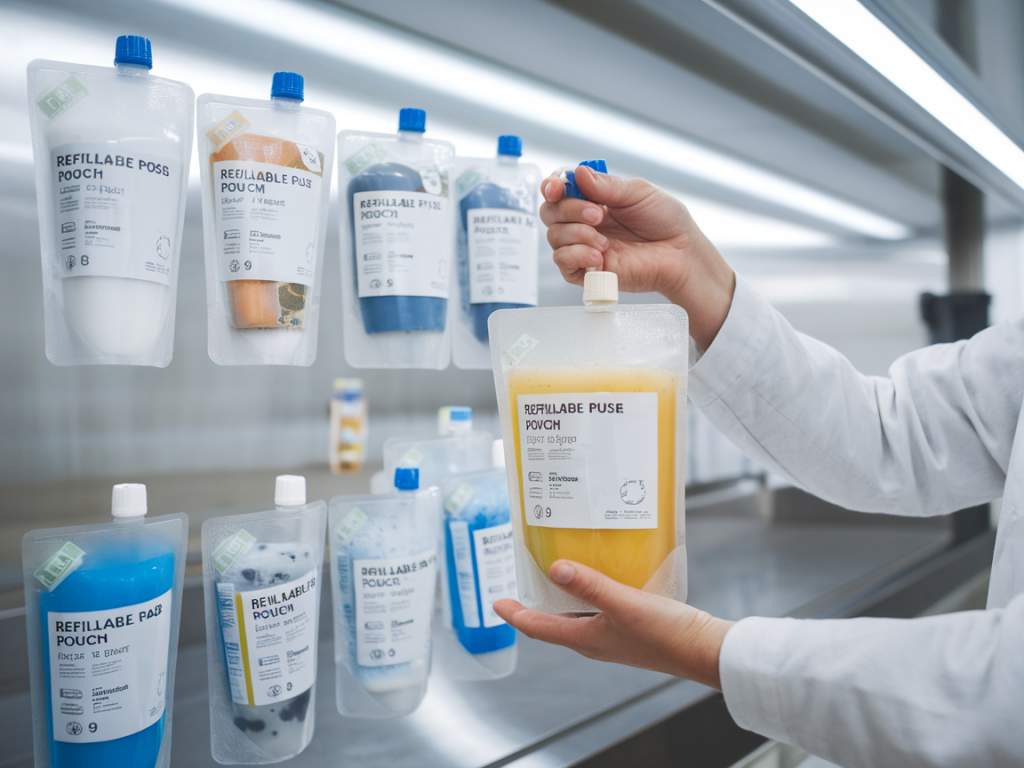
I’ve worked with procurement teams across retail, hospitality and corporate sites long enough to know that green initiatives only win when they make financial sense. If you want procurement to adopt refillable pouch systems, you need a clear, defensible cost‑per‑use model and a step‑by‑step plan that addresses risk, logistics and behaviour change. Below I share a practical roadmap I’ve used with clients to move procurement from scepticism to sign‑off.
Start with the problem procurement cares about
Procurement lives in cost, risk and supplier reliability. When I approach a procurement manager, I open with numbers and mitigations, not platitudes about sustainability. Frame refillable pouches as a way to reduce unit costs, lower waste disposal charges, and improve CSR credentials without disrupting supply chains.
Highlight tangible pain points: rising single‑use plastic costs, recycling fines, staff bin contamination and increasing customer expectations.Demonstrate alignment with company targets: net zero goals, plastic reduction commitments, or corporate social responsibility KPIs.Build a clear cost‑per‑use model
Cost‑per‑use (CPU) is what cuts through the noise. Procurement wants to know: how much will each clean, dispense or guest experience cost compared with the current approach? I use a simple CPU model that includes purchase price, refill costs, labour to refill, equipment amortisation and waste disposal. Below is a template table I present in proposals — replace the figures with your site data.
| Item | Single‑use system (current) | Refillable pouch system | Notes |
| Unit volume per month (litres) | 200 | 200 | Same cleaning/handwash usage assumed |
| Purchase cost (per litre) | £3.50 | £2.00 | Refill bulk pricing |
| Packaging & disposal per litre | £0.40 | £0.05 | Pouches reduce packaging volume |
| Labour to change unit (mins per refill) | 2 | 6 | Refill stations require initial training |
| Labour cost per hour | £12.00 | £12.00 | Local wage assumptions |
| Equipment amortisation (monthly) | £0 | £40 | Dispensers amortised over 36 months |
| Calculated CPU (per litre) | £3.77 | £2.53 | Shows £1.24 per litre saving |
This simplified example demonstrates where savings come from. In practice I include sensitivity analysis (±10–20% on labour and volume) and a three‑year total cost of ownership. Procurement likes to see payback periods and worst‑case scenarios as much as the upside.
Step‑by‑step plan to secure procurement approval
Here’s the pragmatic sequence I follow — each step maps to procurement concerns.
Prepare a one‑page business case: CPU summary, payback, supplier shortlist and risk mitigations. Keep it data‑first and executive‑friendly.Run a pilot proposal: choose 1–3 sites that represent typical usage profiles (low, medium, high). Procurement prefers limited pilots to full rollouts.Define pilot metrics: CPU, wastage rate, refill frequency, staff time per refill, customer feedback, contamination incidents, and carbon impact (kg CO2e).Secure supplier terms: request sample pouches from vendors (Ecover Professional, Diversey, or local refill brands), trial dispensers, and mock SLAs for delivery, returns and emergency top‑ups.Map operational changes: cleaning schedules, storage requirements for pouches, training sessions, and COSHH documentation updates.Quantify risk mitigation: stock safety buffers, contingency single‑use stock, and a supplier escalation path for missed deliveries.Present the pilot plan to procurement with clear go/no‑go criteria and a timeline (usually 8–12 weeks).Anticipate and address common procurement objections
In my experience, objections fall into a few predictable buckets. Prepare one‑line answers backed by evidence.
"What if pouches leak or contamination occurs?" — Use tamper‑evident, double‑sealed pouches and require supplier QC certificates. Track incidents during the pilot and cap supplier penalties in the contract."Will staff time increase?" — Yes initially. Include training and standard operating procedures. Over time refill frequency drops and staff become quicker; our pilots typically show neutral or slightly lower labour per litre after two months."How do we measure sustainability claims?" — Use straightforward metrics: reduction in kg of plastic sent to landfill, lowered waste collection costs, and carbon savings calculated using DEFRA factors. Procurement values measurable targets."Supplier reliability concerns." — Start with a dual‑source approach for early rollouts and build SLAs into contracts with clear lead times and penalties for non‑performance.Pilot design: what I include
A robust pilot is short, measurable and has pre‑agreed success criteria. My pilot template includes:
Duration: 8–12 weeks to capture initial teething issues and steady state usage.Sites: 3 representative locations (different usage, layout and staff profiles).Baseline data: three months of prior usage and waste costs to compare against.KPIs: CPU, refill events per week, staff minutes per refill, customer/employee satisfaction, and environmental metrics (kg plastic avoided, CO2e).Reporting cadence: weekly operational logs and a formal review at weeks 4 and 12.Draft contract and supplier negotiation points
Procurement will want contractual comfort. I recommend including:
Price per litre or per pouch, escalator clauses, and minimum purchase commitments.Service levels: delivery windows, emergency stock clauses, and returns policy for defective pouches.Quality assurance: batch testing, shelf‑life, and COSHH compliance.Trial break clauses: ability to revert to previous system if KPIs not met.Environmental claims: supplier obligations to provide verified recycling streams or take‑back programmes.Metrics that win procurement buy‑in
Procurement responds to numbers. In every presentation I include:
Cost per use comparison and three‑year total cost of ownership.Payback period for dispenser capital expenditure.Operational KPIs recorded during the pilot.Environmental impact in kg plastic avoided and estimated CO2e saved.Risk register with mitigation actions and residual risk scoring.Operational tips from the field
From hands‑on experience, a few practical points reduce friction:
Label dispensers clearly with refill instructions and COSHH icons to prevent misuse.Keep a small emergency stock of single‑use cartridges for hospitality peak days during the early rollout.Train the first line supervisors, not just cleaning staff — they make decisions on the ground.Choose pouches with clear fill lines and compatible dispensers (many suppliers now offer universal adapters).Get procurement the numbers they need, set realistic pilots, and design contracts that protect both sides. When the CPU is clear, risks are mitigated and operational details are handled, procurement becomes one of your strongest allies in scaling refillable pouch systems across an estate.