I’ve run cleaning teams for more than a decade, and one challenge that keeps coming back is onboarding temporary staff quickly without sacrificing safety or standards. You don’t have the luxury of week-long training when a last-minute absence needs covering, but you also can’t afford mistakes that lead to infection control issues, damaged property, or unhappy clients. Over the years I’ve refined a 90‑minute induction that gives temps the essentials, builds confidence, and gets them productive on site — while keeping health & safety front and centre.
Why 90 minutes works
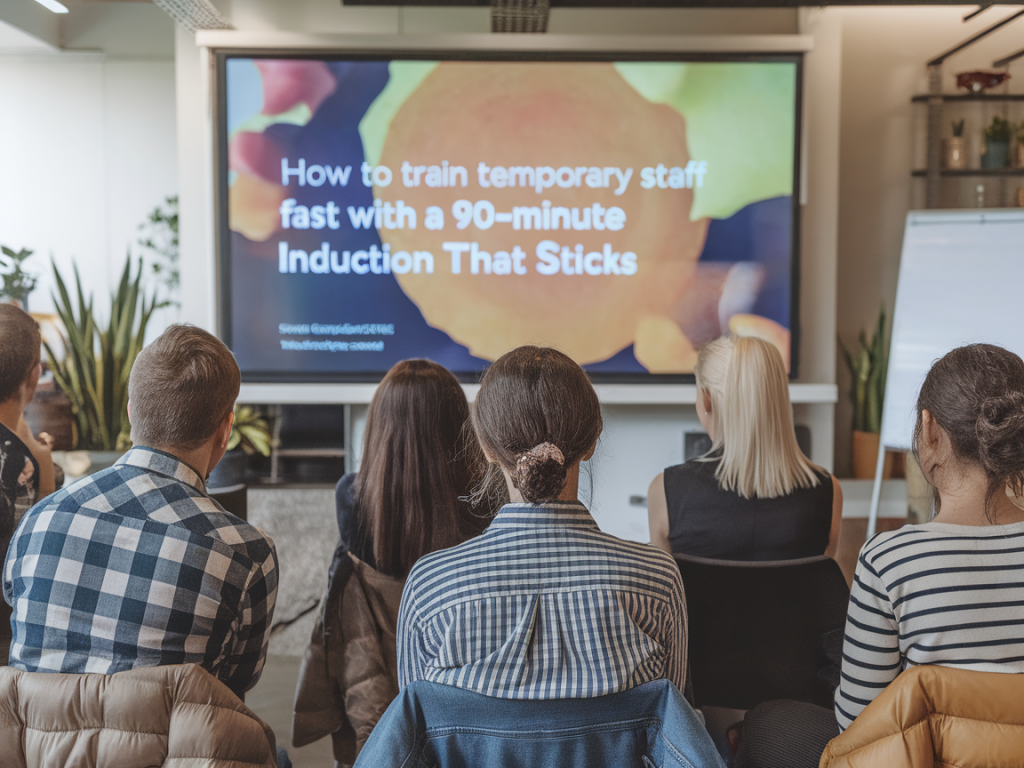
Ninety minutes is long enough to cover core policies and practical tasks, but short enough that the information sticks and the temporary worker stays engaged. It’s structured, repeatable, and focused on outcomes: safe cleaning, correct product use, route familiarity, and clear reporting lines. I treat this as a minimum viable induction — everything not immediately essential gets handed over in follow-up briefings or quick shadow shifts.
Before the temp arrives: prep that saves time
Good inductions start before the person walks through the door. Do these things in advance:
The 90‑minute induction breakdown
I split the 90 minutes into four focused blocks. Keep to the timings — it helps maintain energy and ensures nothing critical is missed.
| Segment | Time | Focus |
|---|---|---|
| Welcome & admin | 10 minutes | Paperwork, ID check, kit handover |
| Health & Safety essentials | 25 minutes | Fire, first aid, COSHH, PPE, manual handling basics |
| Practical demo | 35 minutes | On-the-job demonstration of critical tasks & equipment |
| Walkthrough & Q&A | 20 minutes | Site tour, waste routes, reporting, checklist handover |
What I cover in Health & Safety essentials (25 minutes)
This is non-negotiable. I go through:
I use plain language. Instead of quoting regulations back at them, I explain what to do and why it matters: “This prevents cross-contamination” or “This protects your hands.” Practical examples stick much better than theory during short inductions.
Practical demo (35 minutes): show, then let them try
A live demo beats slides. I focus on the tasks they will perform in that shift:
After demonstration, I let the temp have a go while I observe. I correct technique on the spot and praise what they do correctly. This immediate feedback makes the learning stick.
Site walkthrough & Q&A (20 minutes)
Now take them around the building. Key things to point out:
End the tour by asking two simple questions: “If you saw a spillage, what would you do?” and “Who would you call if you felt unwell?” Their answers show whether the induction landed, and any gaps can be fixed in one minute.
Tools I use to make the induction stick
Over time I’ve standardised a few materials that speed things up and increase consistency:
Common questions I get asked
How do you ensure compliance with COSHH after 90 minutes?
I keep the induction strict and practical. They only use two or three products, all labelled and with simplified COSHH notes. I don’t introduce the entire stock list — that can wait. Also, the buddy checks chemical use that first shift.
What if the temp is nervous or has language barriers?
I use demonstration and pictorial guides. Short, simple sentences and visual cues work better than long lectures. If necessary, a colleague who speaks their language or a translated one‑page handout helps enormously.
How do you measure success?
Two ways: immediate competency checks during the demo, and follow-up quality audits in the first 24–48 hours. If issues appear, I retrain quickly rather than let poor habits form.
Quick templates you can copy
Use these in your induction pack:
Delivering a concise, practical 90‑minute induction lets you bring temps on board fast without cutting corners on safety. The key is preparation, demonstration, and immediate feedback — supported by simple written and visual aids. Keep it focused, keep it practical, and make sure someone experienced is available to back them up during their first shift.