I’ve worked countless night shifts and managed teams who do the same, so I know the trade-off all too well: equipment that keeps you safe can sometimes be bulky and uncomfortable, and anything too light can leave you exposed. In this article I’m sharing practical PPE choices and real-world tips for lone night cleaners that balance safety with comfort — the kind of advice I give to clients when I’m designing cleaning programmes.
Understanding the risks specific to lone night cleaners
When you’re the only person on site overnight, the hazards change. There’s less immediate help if something goes wrong, the chance of encountering unsafe individuals increases in some locations, and tasks often involve working in low light or while other services (like HVAC) are running. On top of that, night shifts often mean fatigue, which raises the likelihood of slips, trips, chemical exposure, or manual handling injuries.
Before picking PPE, assess what you’re likely to face: wet floors, hazardous substances (COSHH-controlled cleaning chemicals), falling objects, sharp waste (e.g. barbed staples, broken glass), and the risk of an assault or verbal abuse in certain environments. Your PPE should be a pragmatic defence against the top risks for your site.
Core PPE items I recommend for lone night cleaners
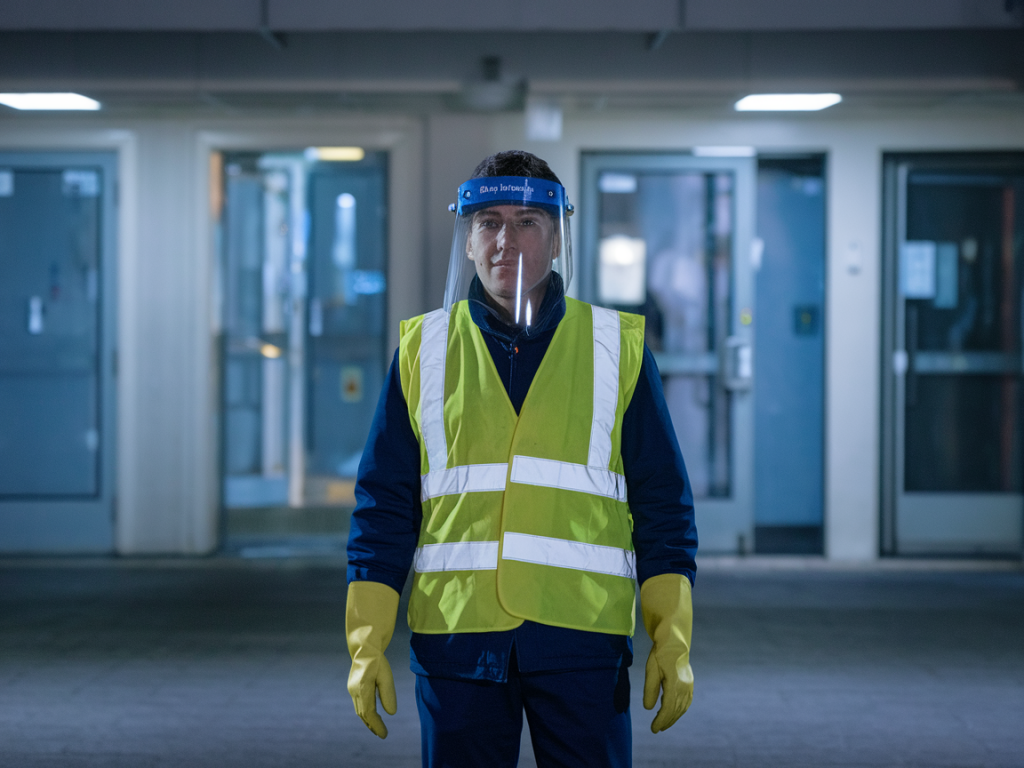
- High-visibility jacket with reflective tape — Even indoors, a slim, breathable hi-vis jacket with good reflective tape improves visibility to security staff and any contractors. I prefer jackets with detachable fleece liners for variable temperatures.
- Comfortable safety footwear (S3) — Go for S3-rated shoes or boots with anti-slip soles and a toe cap. Brands like Caterpillar and Dunlop offer models with good cushioning. Lightweight composite toe caps make them less tiring than steel toes.
- Cut-resistant gloves — Nitrile-coated, cut-resistant gloves (e.g., EN388) protect against sharps and rough surfaces while keeping dexterity for handling cleaning tools and paperwork.
- Disposable nitrile gloves — For chemical handling and infection control. Choose 4–6 mil thickness for balance between protection and dexterity.
- Waterproof overtrousers or a lightweight coverall — Polyester blends with taped seams protect against splashes and are easier to move in than heavy PVC.
- Eye protection — Wraparound safety glasses with anti-fog coating. If you're using spray methods or handling hazardous liquids, goggles are better.
- Respiratory protection — For dusty tasks or when using sprays, an FFP2 respirator (or FFP3 for higher-risk chemicals) is a good choice. Reusable half-mask respirators with P3 filters work well for frequent use and offer better comfort over long shifts.
- Headlamp or hands-free light — A reliable LED headlamp (400–800 lumens) frees your hands and improves safety in low-light areas. Rechargeable models from Petzl or Black Diamond are durable and comfortable.
- Personal alarm or lone worker device — A wearable alarm (Securiton, SoloProtect) with GPS and two-way communication provides immediate contact if you’re threatened or injured.
Choosing materials and fit for comfort
Comfort determines whether PPE gets used properly. My rule is: if it’s uncomfortable, people will remove it. Look for:
- Breathable fabrics — Moisture-wicking liners and breathable membranes reduce sweating and chafing.
- Ergonomic fits — Select gloves and footwear in the right size. Too-tight gloves reduce dexterity; too-loose gloves snag. Shoes should allow room for movement but not slip at the heel.
- Lightweight but protective materials — Composite toe caps, thin but strong fabrics, and soft-shell jackets give protection without bulk.
Practical table: quick comparison of common PPE choices
| Item | Protection | Comfort/Notes |
|---|---|---|
| Hi-vis jacket | Visibility, minor weather | Choose breathable, detachable liner for night shifts |
| S3 safety shoes | Toe protection, anti-slip, penetration resistance | Composite toes reduce weight; try in-store with socks you wear at work |
| Cut-resistant gloves | Protection from sharps | PU-coated palms for grip; choose correct size |
| Disposable nitrile | Chemical and biological protection | Keep mixed sizes; 4-6 mil is versatile |
| FFP2/FFP3 respirator | Particulate/fume protection | Reusable masks with filters are more comfortable long-term |
| Headlamp | Improved visibility | Hands-free, rechargeable preferred |
| Personal alarm | Immediate alert/communication | Essential for lone workers; test monthly |
Selecting PPE for chemical tasks (COSHH considerations)
If you're handling cleaning chemicals, start with a COSHH risk assessment. That tells you which PPE you need: gloves (chemical-resistant like nitrile or butyl), eye protection, aprons or PVC suits, and appropriate respirators. I recommend keeping Safety Data Sheets (SDS) accessible and training staff to use the correct mix of PPE for each product. For example, bleach and acids require different glove materials and respirator cartridges.
Maintenance, storage, and replacement
PPE works only if it’s maintained. Keep a simple log for inspection and replacement: check footwear soles for tread wear, inspect gloves for tears, and replace disposable respirators after a single shift if used with hazardous chemicals. Store PPE in a clean, dry locker and wash reusable items per manufacturer guidance. Replace headlamp batteries or charge units at the start of every shift.
Practical habits that increase safety and comfort
- Fit-check every item — Quick fit checks for respirators and boots reduce the chance of failure on the job.
- Layer for warmth — Use thin base layers under PPE to keep warm without restricting movement. Heat packs in pockets can help in freezing plant rooms.
- Use lights and reflectors — Even with a headlamp, carry a small torch and use reflective bands on trolleys to avoid collisions.
- Buddy checks and check-in routines — If possible, set regular check-in times with a supervisor or use a lone worker app that requires periodic confirmation.
- Training and drills — Practice donning and doffing PPE, respirator checks, and alarm procedures until they become second nature.
Product suggestions I’ve used and recommend
I often outfit my teams with a mix of proven brands: Petzl headlamps for reliability, Caterpillar or Dunlop composite-toe footwear for long shifts, Ansell nitrile gloves for chemical handling, and Honeywell or 3M reusable respirators for dusty or chemical work. For lone worker safety devices I’ve used SoloProtect — their devices are robust and integrate with monitoring services.
Finally, PPE should be part of a broader lone-worker safety plan: site-specific risk assessments, clear reporting procedures, and a culture that values both safety and comfort. When gear is chosen thoughtfully and maintained properly, night cleaning becomes safer without turning every shift into a discomfort test.